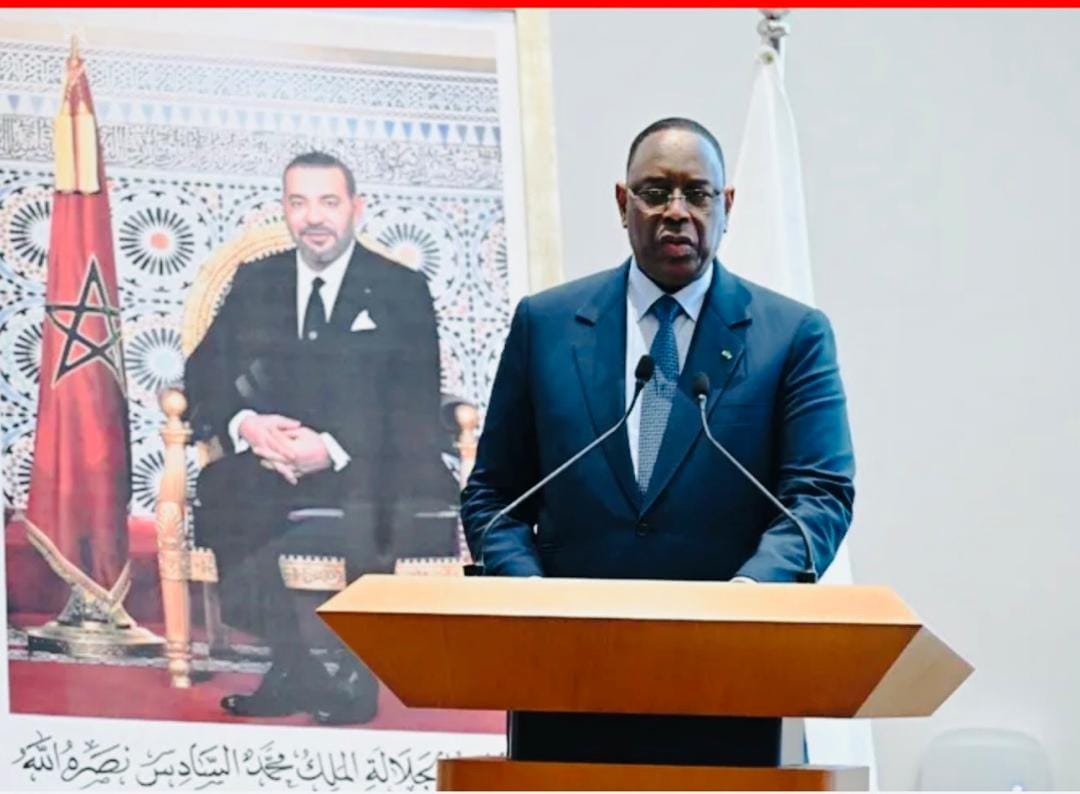
Dakhla World Summit on Health, Social Protection and Human Development, Dakhla, 20–21 November 2026
Distinguished Ministers,
Representatives of international institutions,
Health professionals, researchers and partners,
Distinguished participants,
Ladies and gentlemen,
First of all, I would like to extend my warm and fraternal greetings to His Majesty King Mohammed VI and pray that God may assist him in carrying out his high responsibilities.
Under his dynamic leadership, Morocco continues to advance resolutely along the path of progress, in peace and stability, while remaining open to Africa and the world. This gathering bears witness to that commitment.
By bringing together representatives of government and the private sector, leading experts and professionals in health, social protection and human development, the Dakhla Summit invites us to reflect on some of the major challenges of our time.
These challenges call for our attention. They require bold policy choices and proven scientific and technical expertise. We need substantial resources to set our own priorities and act on them. That is what health sovereignty means.
COVID-19 reminded us that people must be at the heart of national policies and international relations, and that health must be a priority for individual and collective security.
Let us remember that many countries, developed and developing alike, faced shortages of test kits, personal protective equipment, hospital beds, ventilators and even masks.
That was the paradox the pandemic exposed. Societies capable of the most remarkable scientific and industrial feats found themselves short of beds for their patients and even of masks to protect their healthcare workers. Shortages of such basic necessities gave us reason to ask what we mean by progress.
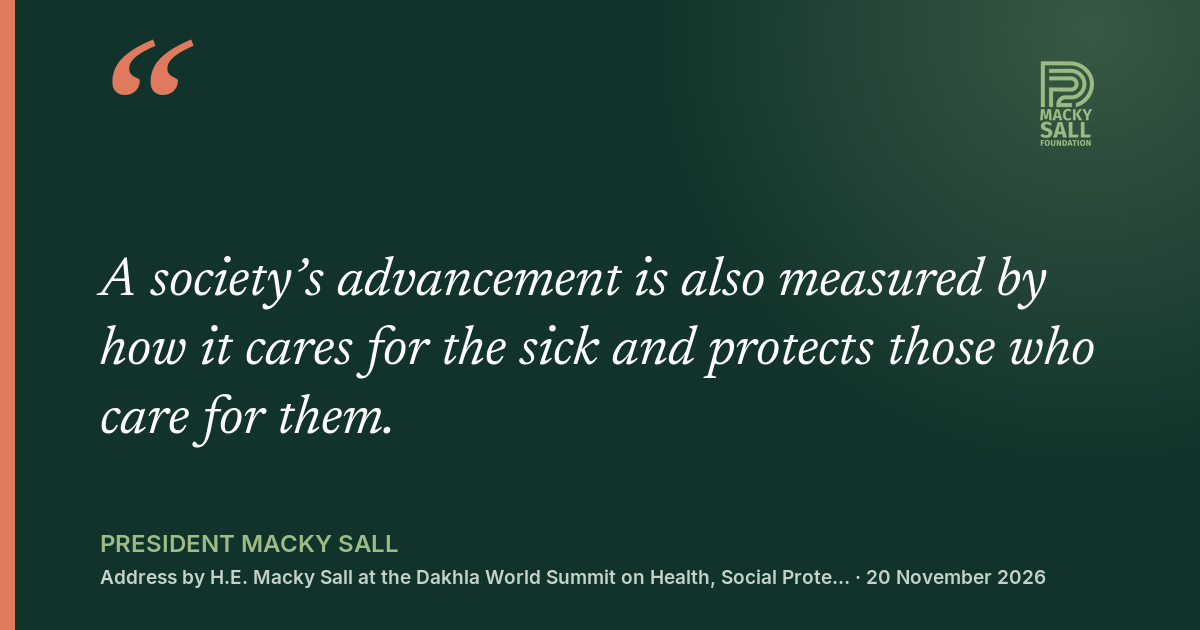
A society’s advancement is also measured by how it cares for the sick and protects those who care for them. It is in ordinary times, when an emergency seems remote, that this responsibility must guide our choices.
We also learned that when borders close and supplies are disrupted, dependence costs lives. No country can protect itself over the long term unless it can respond to increasingly frequent health emergencies.
The COVID-19 crisis has passed, but Ebola continues to take its toll. Malaria, tuberculosis and HIV remain daily battles. Cancer, diabetes and cardiovascular disease are on the rise. Mental health needs greater attention. Mothers and children need better protection.
Added to these challenges are the effects of climate change, conflict and antimicrobial resistance.
In the face of these threats, Africa must strengthen its capacities and better coordinate its responses.
I see five essential priorities.
The first is to strengthen the foundations of our health systems. We see the immediate impact of public policy when the different levels of care are well coordinated and work effectively.
It all begins close to the communities we serve, with a health post that is open, a well-equipped maternity unit, an effective hospital, reliable diagnosis and medicines that are available when needed.
Let us also give prevention greater prominence. Let us make vaccination, nutrition and early screening top priorities. Let us support community health workers and improve access to care alongside social protection, because each reinforces the other.
The second priority is sovereignty in pharmaceuticals and medical products. The continental goal of producing in Africa at least 60 per cent of the vaccines it needs by 2040 reflects this ambition, as does the MADIBA project in Diamniadio, led by the Institut Pasteur de Dakar.
I would also like to mention the remarkable growth of Morocco’s pharmaceutical and biotechnology industry, exemplified by the MARBIO platform in Benslimane.
These and other examples show that, with political will and local expertise, Africa can make significant advances in cutting-edge medical and biotechnology fields.
At the same time, this progress brings new demands. A biotechnology industry needs skilled people across a range of disciplines, a reliable energy supply and stable markets. It must also be able to count on up-to-date regulations and predictable procurement.
Our governments have a responsibility to meet these challenges. Let us build on the complementary strengths of our industrial hubs. Let us strengthen Africa CDC and our surveillance networks. Let us share alerts promptly and organise mutual assistance among laboratories. Let us support African producers that meet quality and competitiveness requirements. Let us organise pooled procurement. I commend Afreximbank, the African Union and Africa CDC for their significant contribution to improving mechanisms for the pooled procurement of medical and pharmaceutical products.
The third priority is to strengthen the health workforce and adapt to technological change. We need more well-trained healthcare workers, researchers and technicians, with the resources they need to do their jobs, develop their skills and ensure equitable access to care across all regions.
I take this opportunity to pay tribute to Senegal’s medical expertise by recognising three of its distinguished representatives who are with us today.
- Professor Moussa Seydi, Head of the Infectious and Tropical Diseases Department at Fann Hospital, who played an important role in the response to COVID-19.
- Professor Fatou Samba Ndiaye, Head of the Clinical Haematology Department at Dalal Jamm Hospital, who successfully led Senegal’s first bone marrow transplant in February 2025.
- Dr Amadou Alpha Sall, former Administrator of the Institut Pasteur de Dakar and current Executive Director for Manufacturing and Supply Chain at the Coalition for Epidemic Preparedness Innovations (CEPI).
The fourth priority is to address the technological challenge and secure long-term financing for health.
For our healthcare facilities, universities, institutes and laboratories, advanced technologies, particularly artificial intelligence, open up new possibilities when used with sound judgement and in keeping with professional and ethical standards. Progress cannot be halted, and AI is now part of the healthcare landscape.
We must also mobilise predictable domestic resources and put appropriate solidarity mechanisms in place. I am thinking in particular of Senegal’s experience with universal health coverage, full or partial coverage of healthcare costs for vulnerable groups, and Family Security Grants. All these mechanisms serve the same purpose of advancing sustainable human development.
At the same time, let us make better use of public spending. Every resource counts. Transparent procurement, regular equipment maintenance and sound management help us make the most of our capacity to provide care. Better tracking of patients’ journeys through the health system can also help keep universal health coverage financially sustainable.
It is equally important for partner countries and institutions to sustain their support over time. Preventing a crisis, training a team or building an industry takes time. Funding must support these efforts beyond the immediate emergency.
The fifth and final priority is international cooperation.
On 20 May 2025, in Geneva, the Member States of the World Health Organization adopted the WHO Pandemic Agreement. It is a significant step forward for health diplomacy at a time when multilateralism is under strain.
The Agreement affirms a reality of our time. The health security of each of our countries also depends on our ability to put international solidarity into practice.
For Africa, the stakes are clear. The agreement adopted in Geneva must help strengthen the continent’s scientific and industrial capacity, promote knowledge sharing and technology transfer, and improve access to vaccines, diagnostics and treatments.
Dakhla can make a valuable contribution to this shared effort, which involves governments, healthcare workers, academics, researchers, laboratories, industry and social protection institutions.
Our people expect practical results. They want to see a healthcare professional in time, receive safe and affordable treatment, and recover from illness without losing their livelihoods.
That, in my view, is the ultimate goal of our shared ambition. It is my hope that the Dakhla Summit will bring us together and give fresh impetus to our efforts to build lasting health sovereignty in Africa, so that we can protect our people and contribute to global health.
Thank you for your attention.